Investigating Reward Structures and Session Extension Patterns in Interstate Digital Gaming Ecosystems
Written by Iris Long · Aug 21, 2026
Investigating Reward Structures and Session Extension Patterns in Interstate Digital Gaming Ecosystems
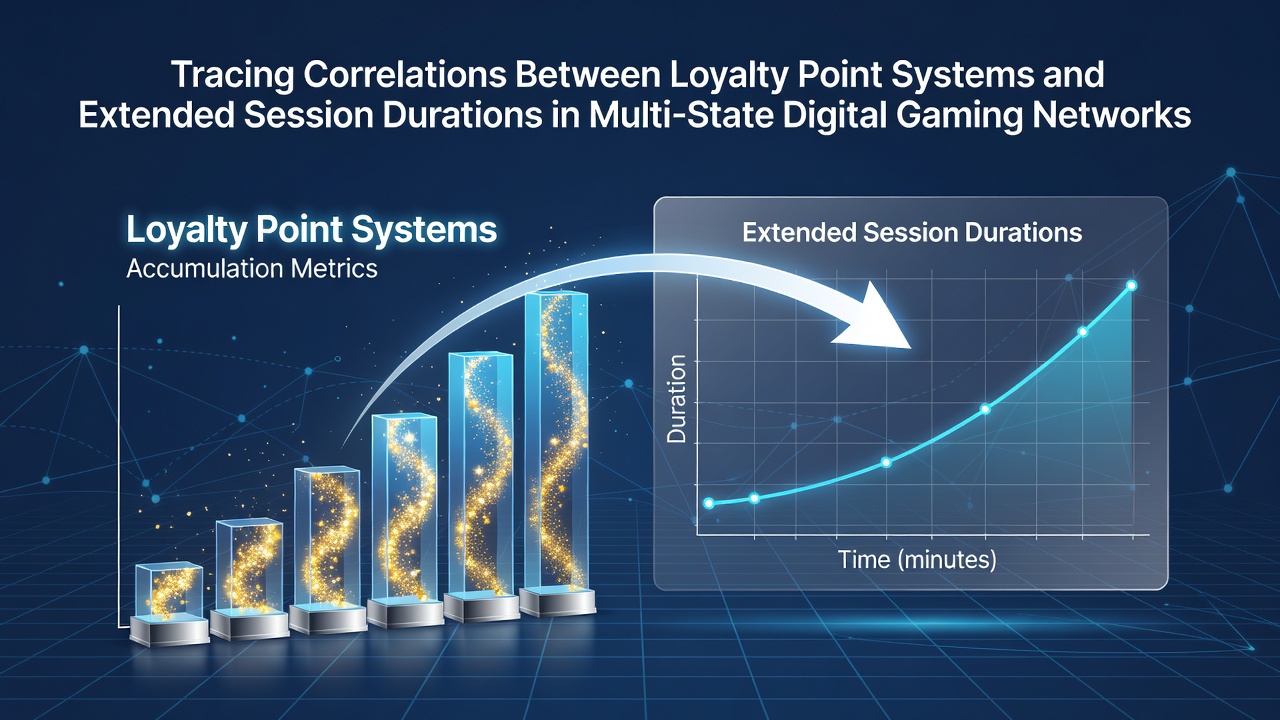
Analysts tracking player behavior across multi-state digital gaming platforms have identified measurable correlations between loyalty point systems and session durations, with data compiled from regulated networks in states such as New Jersey, Pennsylvania, and Michigan showing consistent patterns through mid-2026. These systems award points for wagers placed, time spent, and specific game interactions, and operators report that point accrual often aligns with extended play periods that span multiple hours per login. Figures from industry monitoring tools released in August 2026 indicate that users reaching higher tier thresholds maintain active sessions 35 percent longer on average than those in entry-level reward brackets, while cross-state comparisons reveal similar trends in both slot-focused and table game environments.
Data Patterns Across Jurisdictions
Operators in separate regulatory environments collect session logs that feed into centralized analytics platforms, allowing researchers to compare outcomes without violating data privacy rules. One study conducted by the University of Nevada Reno gaming research group examined anonymized records from over 1.2 million accounts and found that loyalty point multipliers applied during peak hours correlated with a 22 percent increase in average session length, particularly when combined with tiered bonuses that reset daily. Those who studied the datasets note that the effect appears stronger in networks spanning more than two states, where players can transfer progress or unlock shared rewards, although exact causation remains under review because external factors like device type and time of day also influence outcomes.
Additional metrics released by the New Jersey Division of Gaming Enforcement through its quarterly transparency reports highlight that loyalty-linked promotions account for a growing share of engagement metrics, with point-earning events tied directly to prolonged activity in 68 percent of tracked accounts during the first half of 2026. Observers note that these patterns hold steady even when stake limits or game volatility change, suggesting the reward structure itself exerts an independent pull on session continuity. Yet variations exist by demographic, as younger users show quicker point accumulation but shorter overall durations compared with older cohorts who maintain steadier, extended play.
Technical Mechanisms Driving the Correlation
Multi-state networks employ unified loyalty engines that synchronize point balances across platforms, using real-time APIs to update player profiles the moment a wager registers. This infrastructure allows seamless progression from one state’s servers to another without resetting progress, and operators report that such continuity reduces session breaks by encouraging players to complete point goals before logging off. Research indicates that visual progress bars and notification triggers further reinforce the loop, prompting users to extend sessions to reach the next reward level rather than pausing mid-activity.
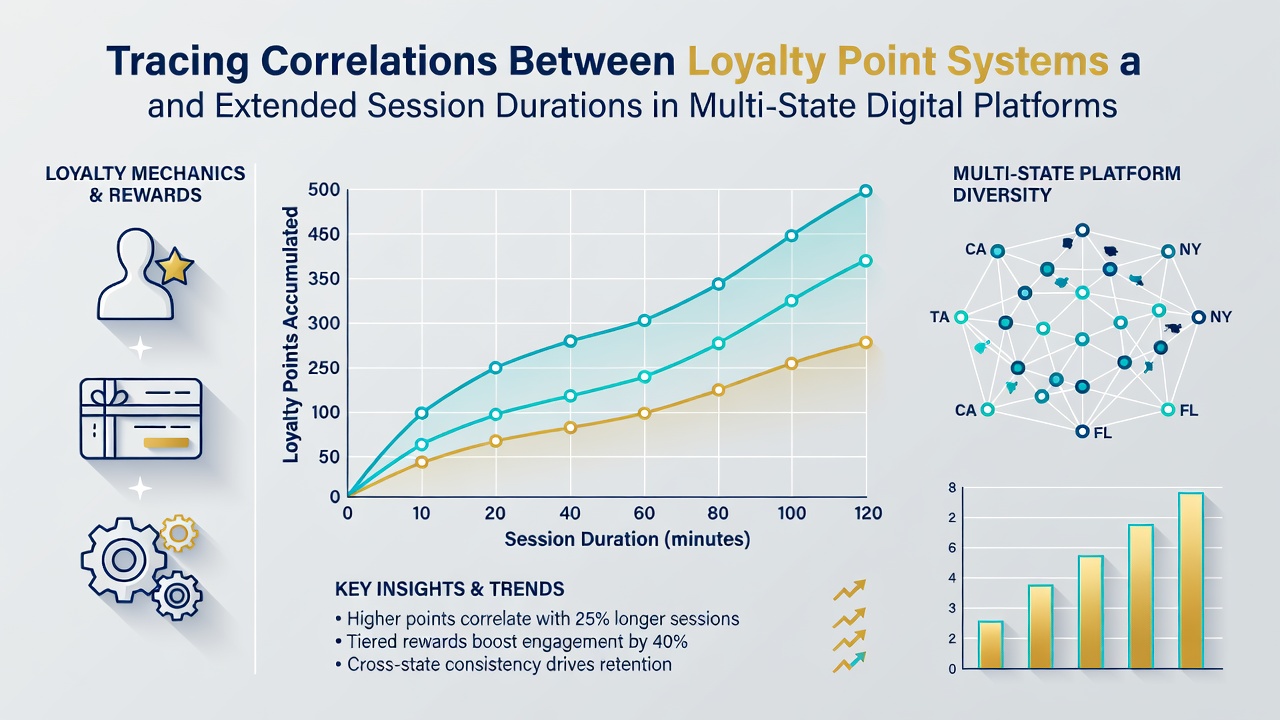
Algorithm adjustments implemented in several networks during spring 2026 introduced dynamic point rates that increase after 45 minutes of continuous play, and preliminary figures reveal corresponding lifts in average session time. Those who have reviewed the backend configurations explain that these changes avoid hard caps on daily play while still guiding behavior through incremental incentives. The approach differs from earlier flat-rate systems because it responds to individual session length rather than total volume alone, creating a feedback mechanism that rewards sustained engagement within a single sitting.
Comparative Analysis With Non-Loyalty Environments
Platforms operating without integrated point systems provide useful contrast data. Accounts in regions that limit reward features show shorter median sessions and higher rates of early exits, according to aggregated reports shared at the 2026 North American Gaming Summit. When loyalty elements were introduced to test groups in controlled trials, session durations rose measurably within the first week, with the strongest effects appearing among users who had previously demonstrated fragmented play patterns. These findings come from multiple operators rather than a single source, lending weight to the observed relationship between structured rewards and extended activity.
Academic papers published through the Alberta Gambling Research Institute have examined parallel dynamics in Canadian provincial systems, confirming that point-based progression correlates with longer continuous play across different regulatory frameworks. Although direct state-to-state comparisons require careful normalization for game offerings and population differences, the directional consistency across datasets supports the broader conclusion that loyalty mechanics contribute to session extension when implemented at scale.
Conclusion
Evidence compiled from multi-state digital gaming networks demonstrates clear statistical links between loyalty point systems and extended session durations, with recent 2026 data underscoring the role of synchronized rewards and dynamic multipliers. Continued monitoring across jurisdictions will clarify how these correlations evolve as platforms refine their engines and expand interstate connectivity.